Tuesday, November 8, 2011

Group Teach Planning!

Our group is incredibly awesome! Thus far, we've held three group meetings which every person has attended. I believe this is especially commendable as poor Arlen has a very length commute and the rest of us simply have packed schedules. Our first meeting was held on a Friday morning in the English Education meeting room. We were sure to bring breakfasty items such as juice boxes, doughnuts, and candy. We used this meeting to decide on the general topics of our unit [Identity & Perspective] and to brainstorm which texts we might use and what lessons we could teach with them. The room we held this meeting in was very useful as we utilized the available books and materials to spark our creativity. 
Our second meeting was held immediately following class last Wednesday; it lasted until about 11pm. Here, we narrowed down exactly what texts we wished to teach, the lessons we wanted to use, and who would be teaching what. We used the computer to explore various medias we could potentially include. We also typed up a draft of absolutely everything and included some questions we needed to ask Dr. Mortimore-Smith. This meeting was where we really ironed out what texts we would be using and outlined the lessons we intended to teach. We were all quite exhausted by the end of it. Beyond that, four out of five of us had History and Structure the next morning in the same exact room; it was like we never left.

Our third meeting was held in Starbucks with Dr. Mortimore-Smith. In this meeting, we went over our ideas and plans with one another and with Dr. Mortimore-Smith. She helped us to clarify certain things like our over-arching essential questions. She also answered the questions we had from our last group meeting. This meeting was quite helpful as it essentially clarified everything we were uncertain about. After Dr. Mortimore-Smith left, we stayed and divvied up who would be responsible for each section of the assignment and lessons. This worked surprisingly well as we had five people. Everyone took responsibility for a proportional amount of work. Lastly, we set dates and times for when things needed to be done.

Heather's and my laptops.
Our texts and lesson ideas have changed, morphed, and have essentially been in flux up until today. Over the last few days and especially tonight, a mountain of emails have been exchanged within our group. Tonight, I met with Heather in the library for about four hours. Together, we created the syllabus for our group's unit and took a fair few trips up to Starbucks for tea. After that, we focused in our the lesson we will be teaching together. We created a graphic organizer for one of the texts, the homework directions/model, and typed up our formal lesson plan. I stayed for a while after Heather left to complete this blog post and NaNoWriMo for a bit :D

Wednesday, November 2, 2011

Dystopia and English Class in the Computer Lab


English Class in the Computer Lab


One thing I really liked about Tracy Tarasuik's article, "Moving my English Class to the Computer Lab", was her observations and comments on her students' multitasking in the computer lab. This is something I've both seen and done myself during school. In high school, a teacher would send us off to complete various things on the computer and essentially every student would have other tabs open to things like email which they would flip back to while completing their work. I was happy to read the Tarasuik held back on her scoldings to "stay on task" so that she could observe what the students had the capacity to complete.


The survey she designed was a really concise way of getting statistics about the students in her school and getting to know them and their habits better. From these results Tarasuik was able to tailor her lessons and activities so that they would work for her students most efficiently. Tarasuik discovered that some of her students, Robert included, were avid YouTubers; they both watched, filmed, and produced videos on YouTube. Doing this properly requires a lot of skill and effort. Tarasuik knew she had discovered Robert's prominent form of literacy. Unfortunately, in many of today's public schools, websites such as YouTube are blocked from both the students' and teachers' access. I know in my own school district, any video or music streaming website was prohibited for anyone to access or view. I believe this seriously limits the potential of learning from modern media in the classroom. There were many times in my Sociology class that the teacher wanted to show some really relevant YouTube video and simply could not. In the same class, we ran into issues when we were trying to learn about racial issues and bullying; many of these websites were forbidden due to their "inappropriate content". I know this kind of loops back to the censorship discussion...but I still believe these websites shouldn't be restricted as they are far too useful in the classroom.

Given essentially every teacher I've had restricts the use of Wikipedia in the classroom, I was a little concerned when I saw the section header "Wikis", but after reading the section I thought it was a great idea. Tarasuik first had her class look at the wikis of other classes so that they had a good idea of what the could do with their own. The groups were then able to create their own and add to them as they read through their respective novels. This webpage involved teamwork, vocabulary, summaries, characters, and more. Essentially, it's all the good stuff in a worksheet but made digital. Her students were more motivated to do the page as they knew it could potentially be viewed by others online. I think this was a smart lesson idea for Tarasuik's class.


Dystopian Novels


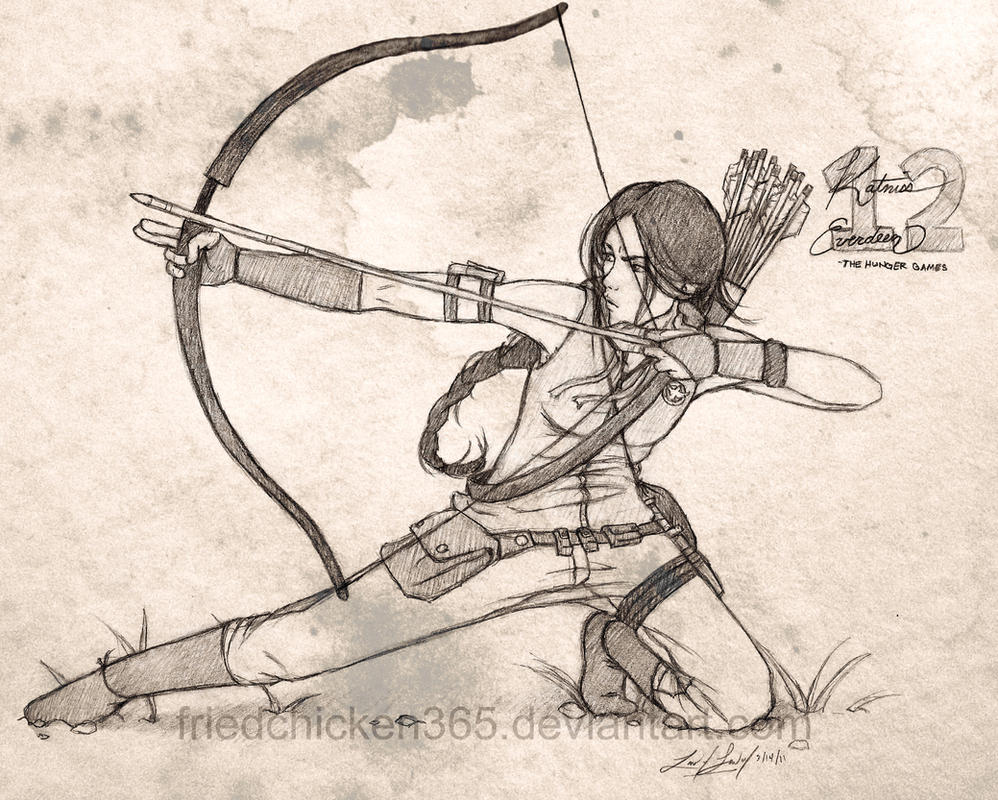
I've found that I actually enjoy reading dystopian novels; I've specifically enjoyed The Giver, The Hunger Games, and The Uglies. Each of these three books [some morphed into series] gives the history behind how their current society came to be. In The Hunger Games:

"An unspecified time before the current date, the face of the Earth changed and modern civilization was seemingly destroyed. It is unknown precisely what caused the "end of the world", but major landmasses changed shape as the sea level rose to unknown heights around the planet. Some time after the end of the world as we knew it, a nation was established in North America that would soon come to be known as Panem. It is unknown precisely when Panem was established and how long it has existed, though it is certain that Panem has been around for more than seventy-five years, and it's entirely possible for it to be at least a century or two old.
Panem eventually grew large enough that it was segmented into thirteen separate districts, each responsible for producing goods of a particular industry to serve the growing needs of the nation, and all operating under the auspices of Panem's oppressive Capitol. Its exact method of expansion is unknown; it is possible that some of the separate districts may have even once been smaller, separate nations that were eventually annexed by Panem."
                                          (http://thehungergames.wikia.com/wiki/Panem)


In the book The Uglies, the world that you and I are currently living in now has been destroyed since we have used too much metal which has rusted, deteriorated, and collapsed after the creation of an "oil bug". This bug made oil combust immediately upon contact with oxygen. The few members of the population who managed to survive combined into cities which they designed to be self-sufficient and eco-friendly so as to prevent another collapse of the world.


I think what I find most interesting about these books is how plausible they all are...I mean we, as a society, really do use far too much metal and oil for our own (and our planet's) good. Something is bound to go incredibly wrong soon. These books are an interesting way to fathom what will happen to the remaining population after such an occurence. 


Tuesday, October 25, 2011

Dumbest Generation? I Respectfully Disagree.

I'd like to take advantage of this week's blog to respond to some quotes from the articles regarding the "dumbest generation". Let's not waste any time!


"Adults are so busy imagining the ways that technology can improve classroom learning or improve the public debate that they've blinded themselves to the collective dumbing down that is actually taking place. The kids are using their technological advantage to immerse themselves in a trivial, solipsistic, distracting online world at the expense of more enriching activities – like opening a book or writing complete sentences." (Bauerlein 1)

I suppose my best answer to this is that there is a population of students who do not use technology and the internet to enrich themselves. I would argue that, on the whole, technology is essential for optimum enrichment. My computer enables me to read essentially any news media I choose and I can even supplement it with video footage. No cable bill necessary! 

My Nook allows me to purchase novels and textbooks for my classes [as an English major, this is a lot of books] at a less expensive price AND it's environmentally friendly (less paper!). Beyond all of that, my Nook has WiFi capabilities that, among other things, allow me to look up any word that I do not understand. 

Perhaps this is not what Bauerlein was referring to, though. Maybe he was talking about all of the online gaming that occurs among students. I would venture to say that gaming is incredibly enriching as well. Students learn valuable skills such as teamwork through these games.

"...and like parents appalled that their AP-amassing darling doesn't know Chaucer from Chopin" (Begley and Interlandi)

First of all, my parents don't know Shakespeare from J.K. Rowling...they're definitely not going to know the difference between Chaucer and Chopin. I didn't know either of those two authors in high school either because my high school essentially teaches the same four line ups of books for 9th-12th grades. I doubt they would teach something like The Awakening as it's ending is a little risky. 
Literature, News, and Education!
"If you are perusing this on the Internet, the big block of text below probably seems daunting, maybe even boring. Who has the time? Besides, one of your Facebook friends might have just posted a status update!" (Drutman)


Drutman is absolutely right! What student has the time to read the news or read a book for pleasure? I know that because I work three jobs and take five classes, I don't! It's a good thing my Facebook gives me news blurbs. You can see them in the red boxes below. This enables me to keep up with my friends, family, and the news! He does make a decent point though, Facebook CAN be distracting. It's a good thing I have dual monitors.... Facebook on one and homework on the other! Actually, I'm just kidding....as you can see from the two screen-shots below, I have articles for this class opened in the tabs. Blogger is on one screen and the articles are on the other. This technology thing is kind of nice!


Politics and History!


"...America's youth know virtually nothing about history and politics. And no wonder. They have developed a 'brazen disregard of books and reading'." [not sure which article I pulled this quote from, sorry!] 

I'll just refer this quote back to the Facebook screen-shots. Though, I guess I should add that as the vice president of Shippensburg College Democrats, I'd like to think many students are still knowledgeable about politics. We, as a club, hold events quite frequently. For instance, last year we created a petition protesting PA Governor Corbett and his proposed budget. Specifically, the budget cuts to PHEAA and Education. Beyond that, I spoke at an APSCUF event which was attended by students, professors, and community members. I suppose what I'm trying to get at here is that students do know things regarding history and politics....some of them are even active! [Here's where I push Dems --> Come out to Grove Forum next Thursday [11/3/11] for Sex, Drugs, and Politics. It starts at 6:30pm, it is hosted by SHIP College Dems, and 5 professors will be speaking on the aforementioned three topics!] I also cannot resist commenting on the 'brazen disregard of books and reading'  part.... I would agree with this. I too have a 'brazen disregard of books a reading'. I mean, have you seen the choices in history and politics? No?  Check out Lady Palin up there ^. 

Tuesday, October 18, 2011

Maus I: Massively Lacking Apathy

"A Lesson from the Holocaust: From Bystander to Advocate in the Classroom"
With this article, Karen Wink addresses apathy in the classroom (specifically, her Coast Guard Academy class). She gave examples of students who attempted to single-handedly elicit responses from their fellow classmates, most of these failed entirely. None of the students were willing to step up and participate, making connections. So how do we, as teachers, encourage our students to break away from conformity in the classroom? Wink defines apathy as "a lack of emotion; lack of interest; unconcern; indifference" (Wink 84). I'm not entirely sure how anyone can read something concerning the Holocaust and remain apathetic about the content. None the less, I liked the teacher's use of her personal experiences. Reading from her journal was an awesome way to get her students engaged.

"Beyond Tolerance: Teaching English in a Post - 9/11 Classroom"
My first thought reading this article: Who is the patron saint of English teachers? :D

Beyond that, I loved that she designed her World Literature class as a trip! This is exactly how I would like to do it when I am a teacher. She used literature that was not even close to the pieces I typically see in a world lit class. Furthermore, she used pictures and the commentary of two different countries to initiate deeper thinking and better conversation/open thinking in her class. When I teach a class like this, I think I'll have a poster-sized map of the world displayed somewhere in the classroom to show where we are, where we have been, and where we may go next. And maybe even give the students an opportunity to show where they would like to go in their own literature.


Maus I
Maus is one of my all-time favorite graphic novels/stories about the Holocaust. I think what I like best about it is how Art Spiegelman chose to represent the different nationalities.

Jews = Mice
Germans = Cats
Poles = Pigs

It enables the reader to experience the book from a different perspective. The reader isn't viewing the characters as human beings, but as animals. We actually just talked a bit about this in my Rise of the Novel class with Dr. Harrow.  Plus, it's a graphic novel; the reader is experiencing both the written text and what they individually interpret from the pictures.

Tuesday, October 4, 2011

Literature Circles

After reading the first two chapters of Harvey Daniels' book, Literature Circles: Voice and Choice in Book Clubs & Reading Groups, I knew I was going to enjoy the rest of the chapters. A book about literature clubs? Yes, please. As a junior in my high school, I began a literature club with one of my English teachers, Mrs. Ashenfelder, as the "adviser". I encase the word in quotes because she never led the club, she was just there to fulfill my school's requirements for a club (adviser has to be present at each meeting). More than anything, she participated like every other student in the club. I was the president of that club up until I graduated and then passed it on to the next person; to my knowledge, the club is still very active. As I read chapter one, I found myself constantly comparing our club to the various sections. In the very beginning of chapter one Daniels states, "In 1990, there were about 50,000 book clubs in the United States; by the turn of the millennium that number had just about doubled." When I read this, I was floored. I had no idea literature and book clubs were so popular! Shortly after this statement Daniels comments on what literature clubs do, "We select and read great books, books that move us, that change us as people..." I'd like to believe that's what our club did as well. As individuals we nominated books that would be later voted on as a club to determine what we would be reading for the next meeting. We had a pretty good mix of classic novels, modern novels, young adult fiction, and more. Some of the books we ended up reading were: 
I had to add this, it's one of my favorite pictures :D
  • The Lovely Bones by Alice Sebold
  • Angela's Ashes by Frank McCourt
  • The Perks of Being a Wallflower by Stephen Chbosky
  • The Jane Austen Book Club by Karen Joy Fowler
  • Jane Eyre by Charlotte Bronte
  • The Giver by Lois Lowry
  • The Great Gatsby  by F. Scott Fitzgerald
  • The Bell Jar by Sylvia Plath
Later in the chapter, Daniels spoke about the negatives and positives of role sheets. Role sheets are something I've been instructed to use in classes but we never used them in Lit Club. I can see how they could be useful for a club that was just starting, but beyond that I kind of feel like they would just be crutches; the participants would never think out beyond that.

In chapter two, Daniels breaks down "Eleven Key Ingredients" for his own literature circles. One of the eleven suggestions is that different groups read different books once the books have been selected. I never thought of what I would do if I had a large group and we couldn't come to a consensus on what to read. Daniels suggests that the large group breaks down into smaller groups. I think this makes a lot of sense as it allows for the students to really filter down what they truly wish to read; it's a happy medium between teacher assigned and individual reading :]